
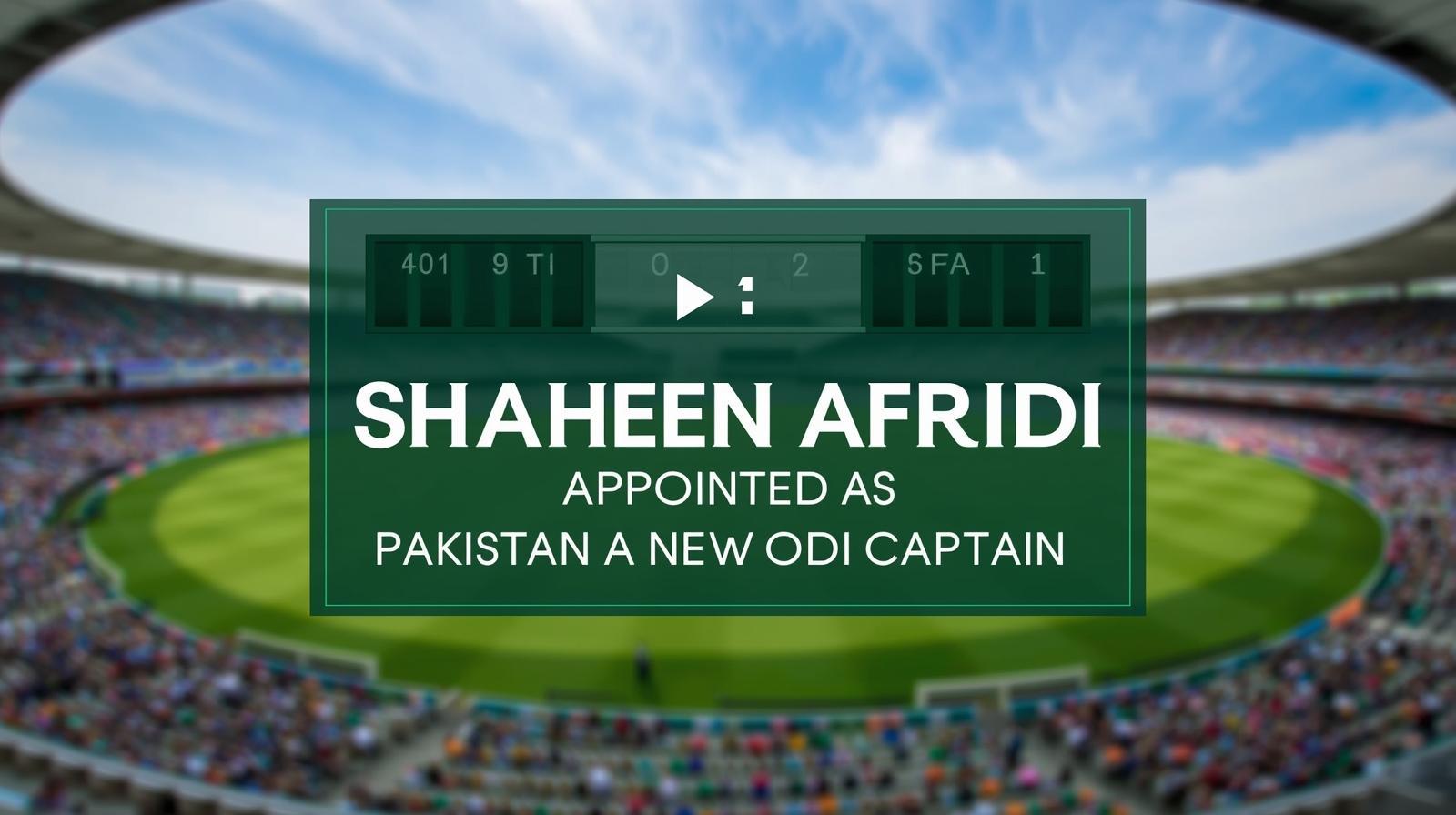

The Pakistan Cricket Board (PCB) has made another major leadership switch, appointing Shaheen Shah Afridi as the new ODI captain, replacing Mohammad Rizwan just months before the South Africa series. Was Not expected.
While the move has sparked excitement among fans, it also raises familiar questions — why does Pakistan change captains so frequently, and is this the right time for another shake-up?
🇵🇰 The Announcement That Shook Things Up
PCB Chairman Mohsin Naqvi confirmed the decision in Islamabad after consulting head coach Mike Hesson, Director High Performance Aaqib Javed, and the selection panel.
Shaheen, at just 25, now leads Pakistan’s ODI side as they prepare for the upcoming three-match series against South Africa beginning November 4.
This is Afridi’s second attempt as captain after briefly leading Pakistan in T20Is last year. Known for his fiery pace and passion, Shaheen’s leadership is seen as a symbol of Pakistan’s intent to reset and inject fresh energy into white-ball cricket. Time will tell where Shaheen takes the pakistan’s ODI team.
⚖️ Why the Change?
The official PCB statement cited a need for “fresh direction and renewed purpose” — but insiders say it’s also about results and accountability. Under Rizwan’s ODI leadership, Pakistan delivered mixed performances. The team looked promising early in his tenure, but their inconsistency in key moments — particularly in high-pressure chases and tournament games — raised doubts about his tactical sharpness.
There was some unrest as well in the dressing room when Rizwan was captain. He’s known for his discipline and calm approach, but sometimes that composure translated into conservative tactics — especially during tight matches where bolder calls were needed.
Moreover, Rizwan was juggling too many roles — wicketkeeper, top-order batter, and captain — which may have diluted his effectiveness. In modern cricket, especially in fast-evolving formats, boards often prefer lighter leadership loads to maintain individual performance consistency. In recent test series going on, Rizwan has mixed performance as a better as well. He performed well in first test match.
💥 What Shaheen Brings to the Table
Shaheen Afridi has earned his name as of now in Pakistan’s cricket team. His bowling speaks for itself: explosive spells, aggression, and the ability to change games in a few overs but in recent past many questions on that as well.
Shaheen can lead from the front, but he needs to raise his bowling performance bar as well.
He’s also known to back young players, often mentoring upcoming fast bowlers during domestic circuits. That quality could help build a more cohesive environment for the team’s next generation.
However, the challenge is real: being both strike bowler and captain is one of the hardest dual roles in cricket. Managing workload, staying injury-free, and making clear-headed decisions under pressure require maturity and composure — two qualities Shaheen will need to develop rapidly. ODI format is not fast as that of T20, so need different tactics to succeed. Most cricketers say ODI cricket is trickiest one.
🤔 Was It Fair to Remove Rizwan?
Here’s where debate begins. Rizwan wasn’t exactly failing as captain — he just wasn’t winning enough. And that’s a fine line. His leadership had structure, his communication was respected, and he enjoyed fan support as a consistent performer with the bat.
The real question is whether Pakistan’s leadership impatience is becoming a pattern of instability rather than progress.
In the last 12 months alone, Pakistan has changed white-ball captains three times — from Babar Azam to Rizwan to Shaheen. Each switch resets team chemistry, strategic plans, and dressing-room dynamics.
Cricket isn’t football — success doesn’t come from frequent managerial changes. Building a winning culture takes time, and every leadership reset disrupts the rhythm.
So, was Rizwan’s removal justified? Only time will tell. But the bigger issue might not be who the captain is, but how long they’re allowed to lead before the next reshuffle.
🔄 Pakistan’s Captaincy Carousel: A Recurring Theme
Pakistan cricket has always had a complicated relationship with leadership. From the days of Imran Khan’s dominance to the musical chairs of recent years, captains have often been appointed more as reactions than as part of a long-term strategy.
Each board administration brings a new philosophy — and a new captain. That kind of volatility might excite fans in the short term but hurts long-term planning.
When players are unsure of who’s leading them, accountability blurs, and team identity weakens.
Consistency breeds confidence. Look at teams like India under Dhoni or England under Morgan — the extended run allowed captains to make mistakes, learn, and build cultures. Pakistan’s problem isn’t talent; it’s continuity.
🧭 The Road Ahead for Shaheen and Pakistan
Shaheen now carries the hopes of a nation that’s both excited and skeptical. His leadership will be tested immediately against South Africa’s seasoned lineup. It will be tough challenge, with the home advantage, and as we discussed ODI format is most testing and trickiest.
If he manages to inspire belief and maintain personal form, this could be the start of a new era. But if the PCB’s impatience returns, we might see another headline in six months with another “new captain” announcement.
🏁 Final Thoughts
Shaheen Afridi’s appointment as ODI captain feels like a mix of courage and chaos — courageous because Pakistan is trusting youth and aggression, chaotic because it continues their tradition of short-term leadership cycles.
Rizwan may have deserved more time, but in Pakistan cricket, patience has never been the virtue. Whether this decision sparks revival or regret depends on one thing — whether PCB finally sticks to a plan long enough to let it work.


